PROCESS MANUAL

Binary Options Trading Journal

Binary options decisions happen under compressed timing, where reaction speed can silently override plan integrity.

A structured journal is needed to capture setup logic, expiry rationale, and behavioral state in the moment of execution.

When logging standards are fixed, short-duration behavior becomes diagnosable and correction cycles become repeatable.

The Real Problem

Most binary journals are written after results are visible, which shifts focus from decision quality to outcome interpretation.

That creates false confidence in bad process periods and excessive self-correction in statistically normal variance periods.

Without explicit expiry rationale and pressure-state tagging, traders cannot separate timing error from setup error.

A robust journaling framework solves this by capturing context and intent before outcome feedback distorts memory.

Framework Breakdown

The framework enforces decision documentation in a sequence that preserves causal clarity and supports precise corrections.

01

Setup Qualification

Define and score setup validity before selecting expiry timing to prevent rushed entries from being normalized.

Separating setup quality from urgency protects the decision process from reactive shortcuts.

App bridge: TradeReality captures setup grade fields before execution notes can be finalized.

02

Expiry Rationale Capture

Record expiry selection logic at decision time with market condition tags and confidence context.

Real-time rationale capture reduces hindsight rewriting and keeps reviews evidential.

App bridge: Binary Mode logs attach expiry notes directly to each execution event.

03

Pressure-State Mapping

Tag urgency, hesitation, and override impulses so recurring behavior can be clustered by condition.

State mapping turns subjective stress into structured review data.

App bridge: TradeReality filters state tags across session windows for pattern analysis.

04

Correction Validation

Apply one journaling or execution correction variable per cycle and monitor it across matched contexts.

Controlled correction cadence prevents instability from over-adjustment.

App bridge: Correction checkpoints are linked to follow-up reviews in the app timeline.

In-App Integration

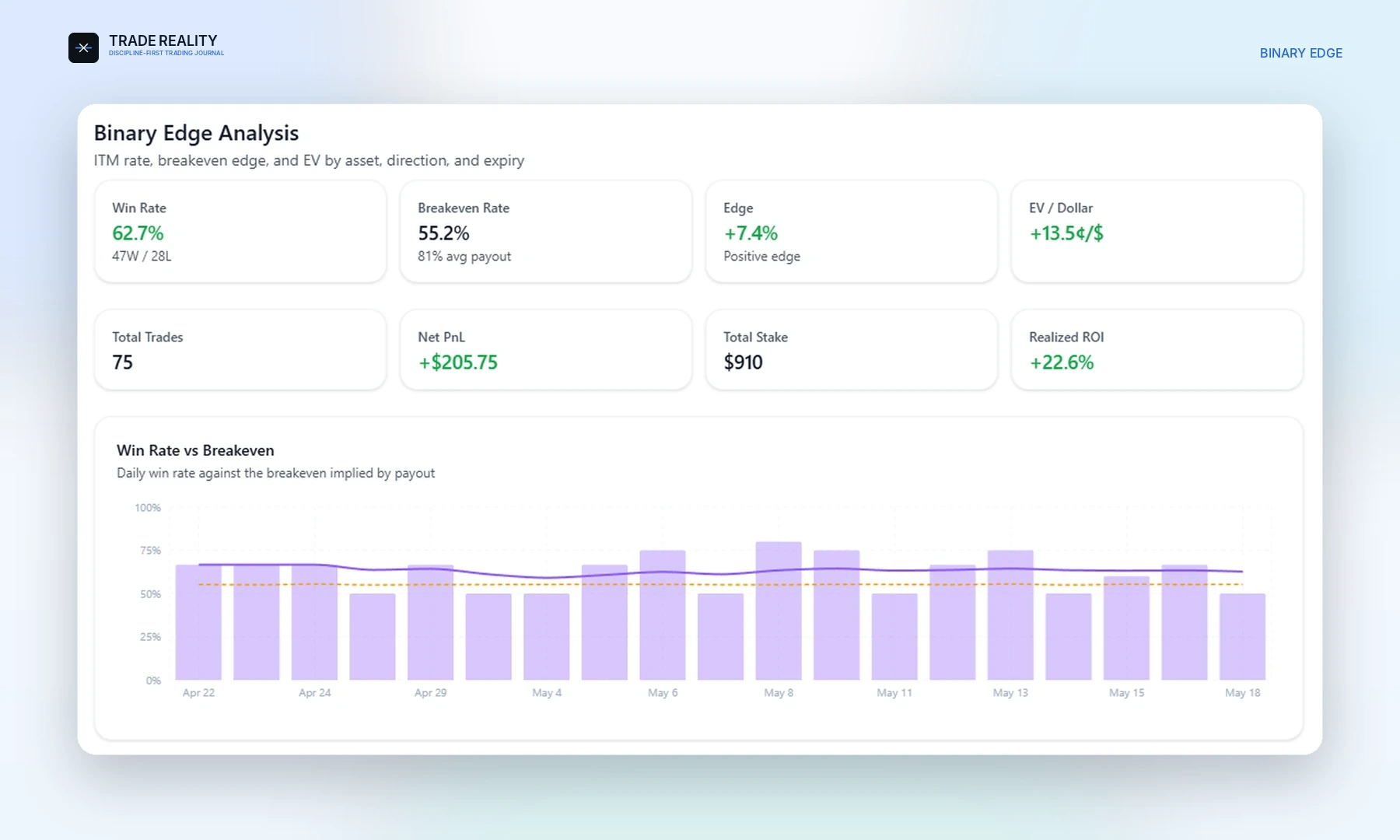
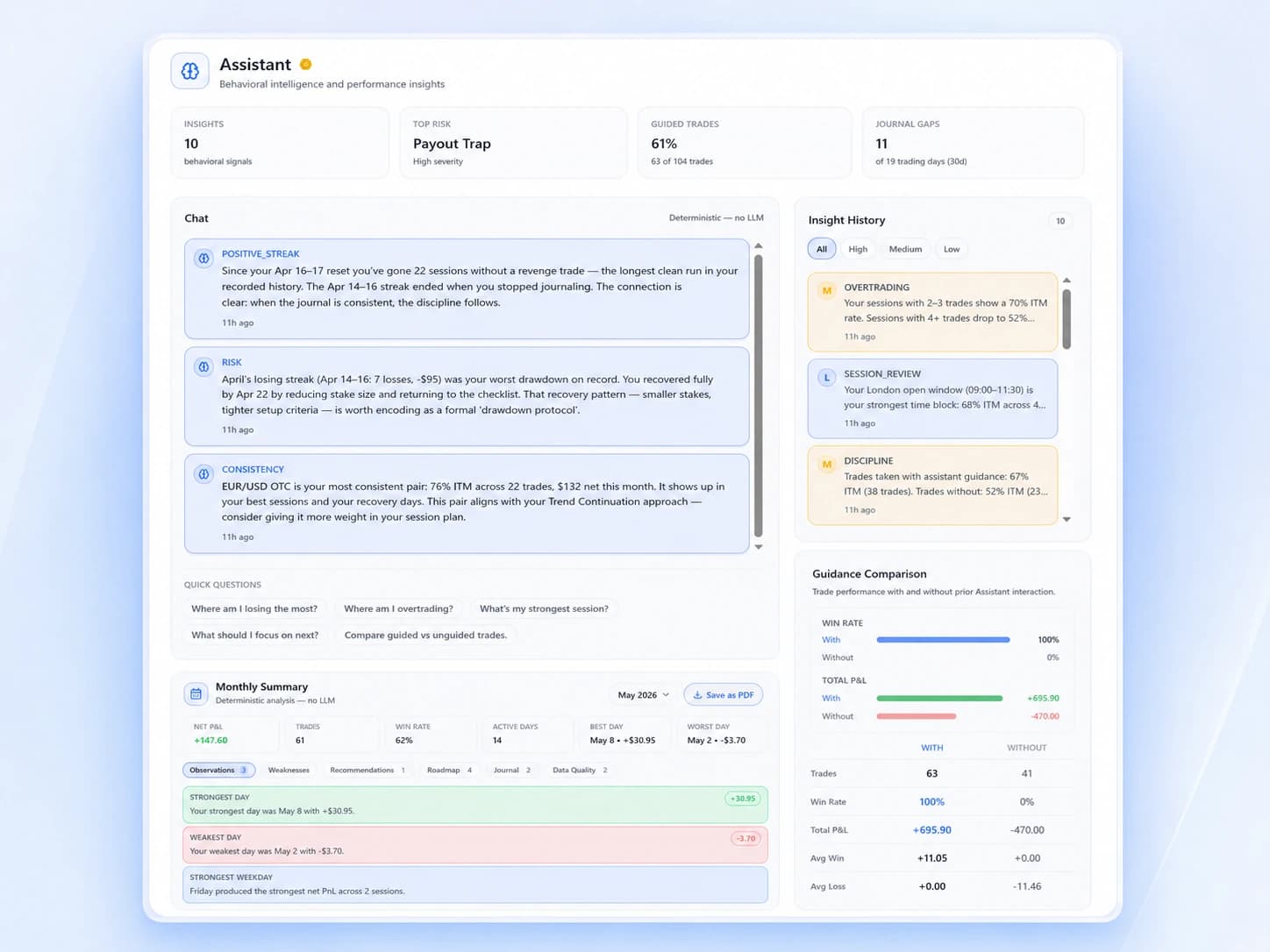
TradeReality operationalizes binary journaling through dedicated data fields, condition filters, and review checkpoints.

Metric-based discipline tracking

Track adherence and override frequency across comparable volatility windows.

This distinguishes random variance from recurring decision-quality drift.

Binary Mode execution log

Capture expiry decisions with timestamped context and state tags.

The log preserves decision sequence integrity for post-session diagnostics.

Alignment conflict detection

Identify mismatches between declared criteria and actual entries.

Conflict visibility allows targeted corrections instead of generalized routine changes.

Logical Evidence

Evidence is process-based. The objective is better causal attribution, not promotional claims about results.

Logic 1

Structured journaling increases visibility of timing and behavior errors.

Logic 2

Higher visibility reduces hidden drift and improves correction accuracy.

Logic 3

Better correction accuracy improves long-run process stability across binary sessions.

Build Process. Not Hope.

No broker connection required.

TradeReality supports process-first journaling, review workflows, and behavioral diagnostics for discretionary traders.