
BEHAVIOR REVIEW

Revenge Trading Fix: Review Behavior Before the Next Trade

Revenge trading is one of the most common and costly behavioral patterns in discretionary trading. It happens when a loss triggers an emotional response that overrides process — and the next trade is entered to recover, not because a valid setup exists.

A behavioral review system does not promise to stop the impulse. It creates the evidence base needed to recognize the pattern before it repeats. That is what review is for.

This guide explains what revenge trading is, why it persists, and how to use structured journaling to surface the pattern and build a correction process.

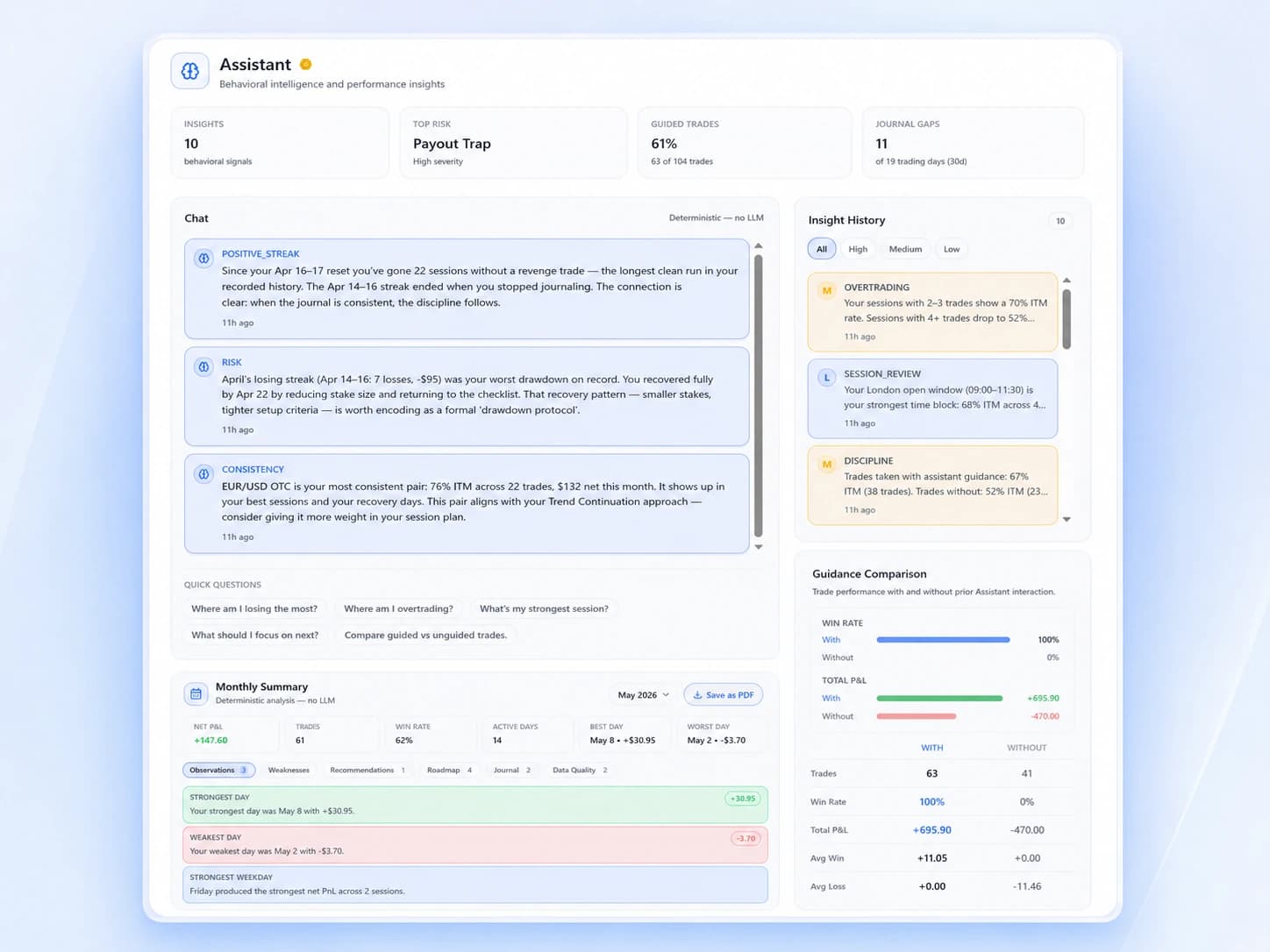
TradeReality assistant workspace showing behavior pattern analysis from your own trading data

What is revenge trading?

Revenge trading happens when the motive behind a trade entry is emotional recovery from a prior loss — rather than a setup that meets your established criteria. The entry looks like a normal trade on the outside, but the decision logic is different: urgency, frustration, or the need to break even is driving it.

It typically follows a specific sequence: a loss (or series of losses) triggers emotional discomfort, the discomfort creates urgency to recover, the urgency overrides the checklist, and a trade is placed that would not have been placed otherwise. The result is often another loss, which deepens the pattern.

Recognizing revenge trading requires more than intuition. It requires comparing the decision logic of each entry against a baseline — which is why journaling is the mechanism, not the solution.
Why revenge trading usually repeats

The reason revenge trading repeats is that the underlying trigger is never isolated or reviewed. The trade is logged as a loss, the session ends, and the next session begins without examining what drove the entry.

Without a record of the emotional state, the session context, or the decision logic at entry, the pattern stays invisible. The trader cannot correct what they cannot see. This is the core problem — not the emotion itself, but the absence of evidence about when and why it overrides the process.

Over many sessions, unreviewed emotional patterns compound. The behavior becomes embedded as a reactive habit rather than an identifiable mistake with a structured correction path.

  • Loss is logged but the emotional trigger is not
  • No session context captured before or after the entry
  • No comparison between rule-adherent and rule-violated trades
  • No correction target set after the episode
  • Pattern repeats in the next losing session

How a trading journal helps you notice the pattern

A trading journal creates the evidence layer that makes the pattern visible. When you record the emotional state at the time of entry — not after the result — and when you record session context alongside the trade, you build a dataset that shows where rule adherence breaks.

Over 20 or 30 sessions, journal entries reveal clusters: the pattern of entries after consecutive losses, the sessions where position size changes emotionally, the moments where the 'next trade will be different' logic appears. These clusters are not visible in an outcomes-only log.

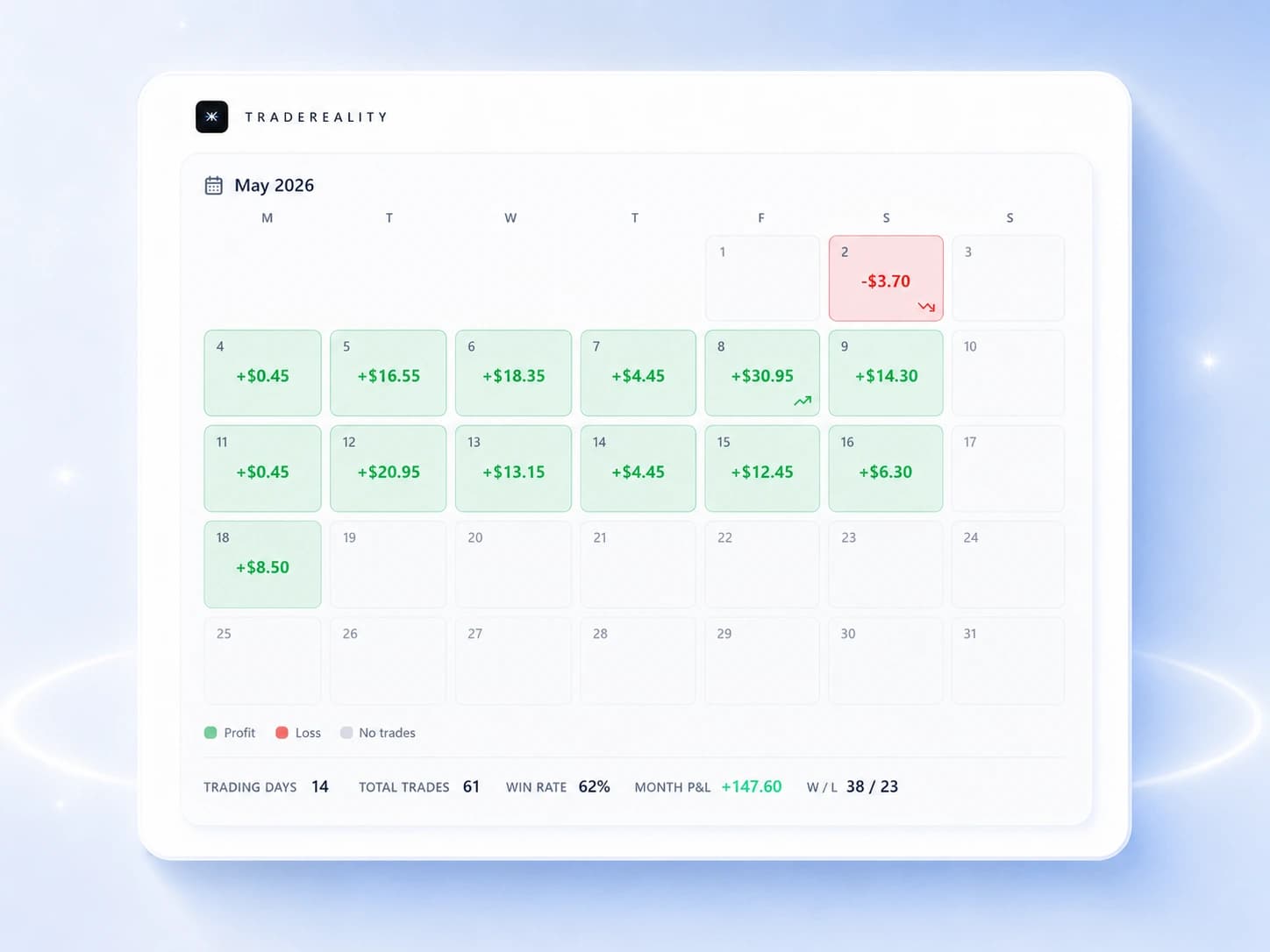
The calendar view in a review system helps surface session-level patterns. Losing streaks, overtrading days, and sessions that ended well despite starting poorly — these are all visible when sessions are captured, not just individual trades.

TradeReality daily P&L calendar with session markers and journal indicators

What to review after a revenge trading episode

After you identify a session that involved revenge trading, use a structured review process. Work through these questions for each suspect trade — not from memory, but from the journal entry captured at the time of the trade.

  • What happened before the trade? Was there a prior loss, a missed setup, or emotional discomfort?
  • Was the trade placed after a loss or a series of losses in the same session?
  • Was position size changed compared to your normal session rules?
  • Was the session already outside your normal trading rules when the entry was placed?
  • What specific rule would have stopped this trade if applied correctly?
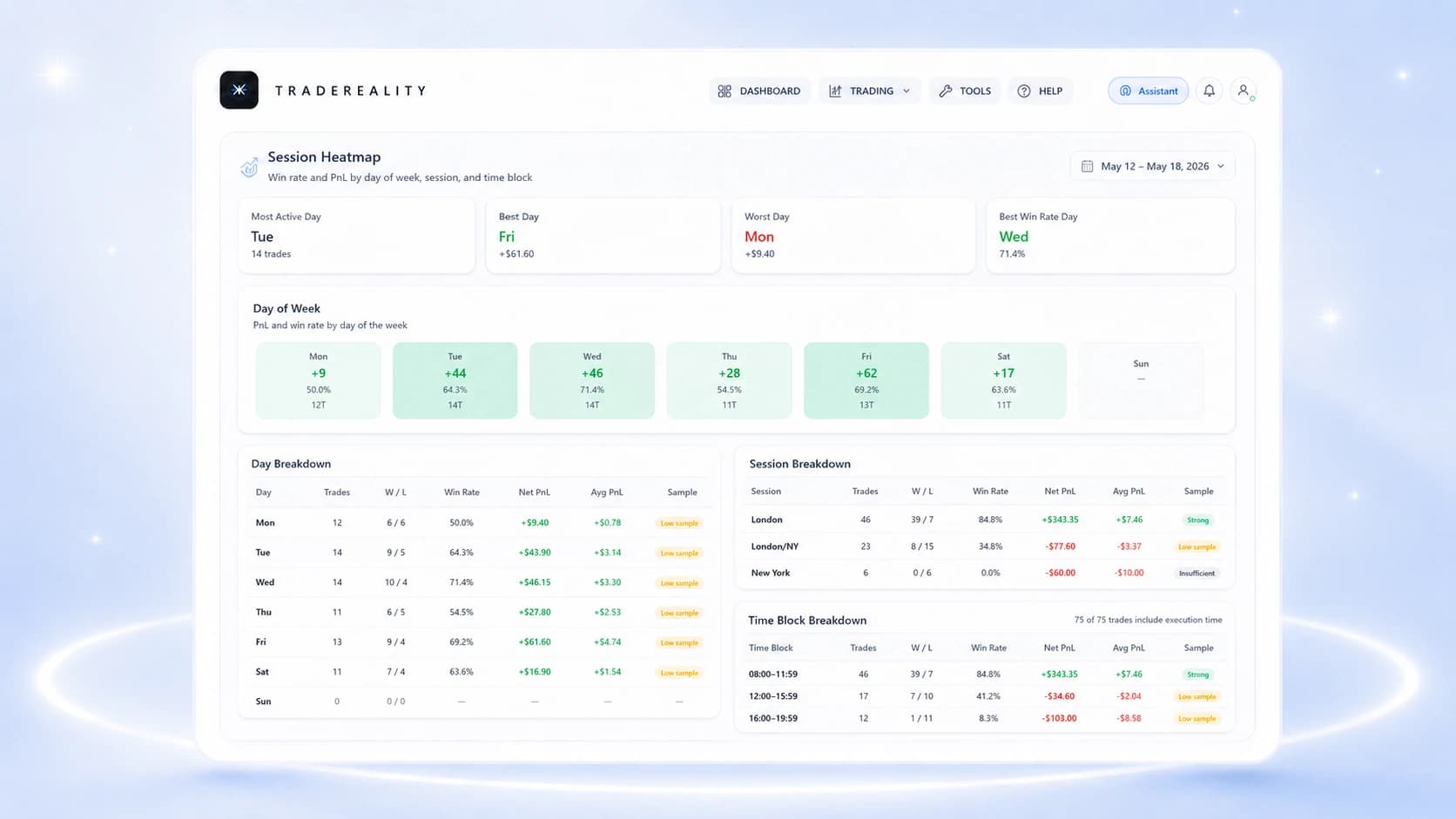
TradeReality session heatmap showing time-block performance patterns across days

How TradeReality supports behavior review

TradeReality is built around the review cycle, not the trading cycle. After you log trades and journal entries, the system surfaces patterns across sessions, time blocks, and behavioral indicators.

The assistant works only with your own journaled data. It does not provide signals, predictions, or strategy recommendations. It surfaces what your own records show — which is the only evidence that matters for behavioral correction.

Session heatmapIdentify which time blocks and days show the highest deviation from your rules
Calendar viewSurface losing streaks and session-level overtrading patterns
Journal historyReview logged emotional states and decision notes across sessions
Monthly PDF reviewStructured summary with behavioral focus — no outcomes-only reporting

FAQ

What is revenge trading?

Revenge trading is the behavior of entering trades primarily to recover a recent loss — rather than because a valid setup exists. It is driven by emotional urgency, not evidence.

Why does revenge trading keep repeating?

Without a structured review process, the emotional trigger that caused the original episode is never identified. The behavior repeats because the pattern is never made visible.

Can a trading journal help stop revenge trading?

A journal does not stop the behavior directly — but it creates the evidence needed to recognize the pattern across sessions. Recognition is the prerequisite for correction.

What should I review after a revenge trading episode?

Review what happened before the entry, whether it followed a loss, whether position size changed emotionally, whether the session was already outside normal rules, and what rule would have stopped the trade.

Does TradeReality provide trading signals or predictions?

No. TradeReality is educational analytics software. It does not provide financial advice, trade signals, or market predictions. All trading decisions remain solely with the trader.

How long does it take to reduce revenge trading patterns?

That depends entirely on how consistently you review sessions and apply corrections. There is no fixed timeline. Improvement requires structured evidence collection across many sessions.

Start reviewing your trading behavior with evidence.

Track trades, sessions, journals, targets, and behavior in one place — without signals or predictions.

Disclaimer: TradeReality is educational analytics software. It does not provide financial advice, trade signals, or market predictions. Trading involves significant risk of financial loss. All trading decisions remain solely with the user.