
OVERTRADING REVIEW

How to Stop Overtrading With Better Review

Overtrading is not a strategy problem — it is a behavioral pattern. It happens when emotional pressure overrides session rules and trades are placed without a valid setup.

Stopping overtrading starts with identifying the specific trigger: the session phase, the prior result, or the emotional state that causes the rule break. That identification requires evidence from reviewed sessions — not intentions.

This guide explains what overtrading is, why it repeats, and how structured review makes the pattern visible enough to correct.

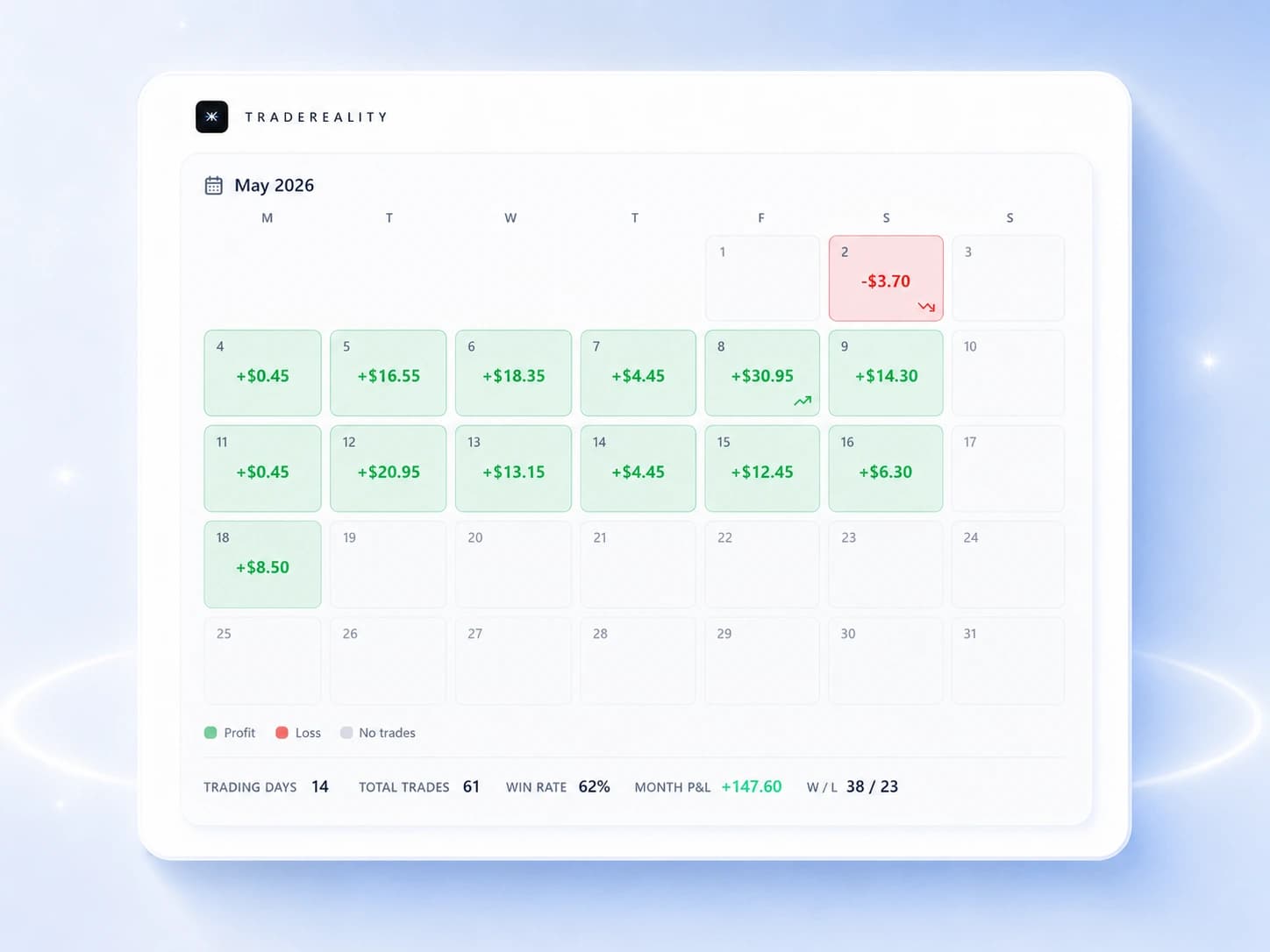
TradeReality P&L calendar showing session-level overtrading patterns and journal markers

What is overtrading?

Overtrading is placing more trades than your session rules allow — entering trades without a valid setup because of boredom, loss recovery urgency, or the discomfort of being on the sidelines.

It is distinct from trading frequently. A trader who places 20 trades per session inside their rules is not overtrading. A trader who places 5 trades but the 4th and 5th are placed after two losses without a valid setup — that is overtrading.

Rule break, not trade count

Overtrading is defined by breaking your session rules — not by the number of trades placed.

Emotional trigger

The immediate cause is almost always emotional: urgency, boredom, loss recovery, or the fear of missing a move.

Invisible without logging

Overtrading feels rational in the moment. It only becomes visible in the session review afterward.
Why overtrading usually repeats

Overtrading repeats because the trigger is never isolated. After a session where it happened, the trader logs the outcome, notes they overtraded, and moves on — without recording the specific trigger that caused the rule break.

Without that record, the same trigger appears in the next session and produces the same response. This is not a willpower problem. It is an evidence gap.

  • The trigger (prior loss, session phase, boredom) is never identified specifically
  • Overtrading is logged as an outcome observation, not a behavioral pattern
  • No session rule is applied to the specific window where overtrading happens
  • The correction applied is general ("trade less") rather than specific ("no trades in the third hour after two losses")
  • The pattern continues because the correction never addresses the actual trigger

How a review system makes overtrading visible

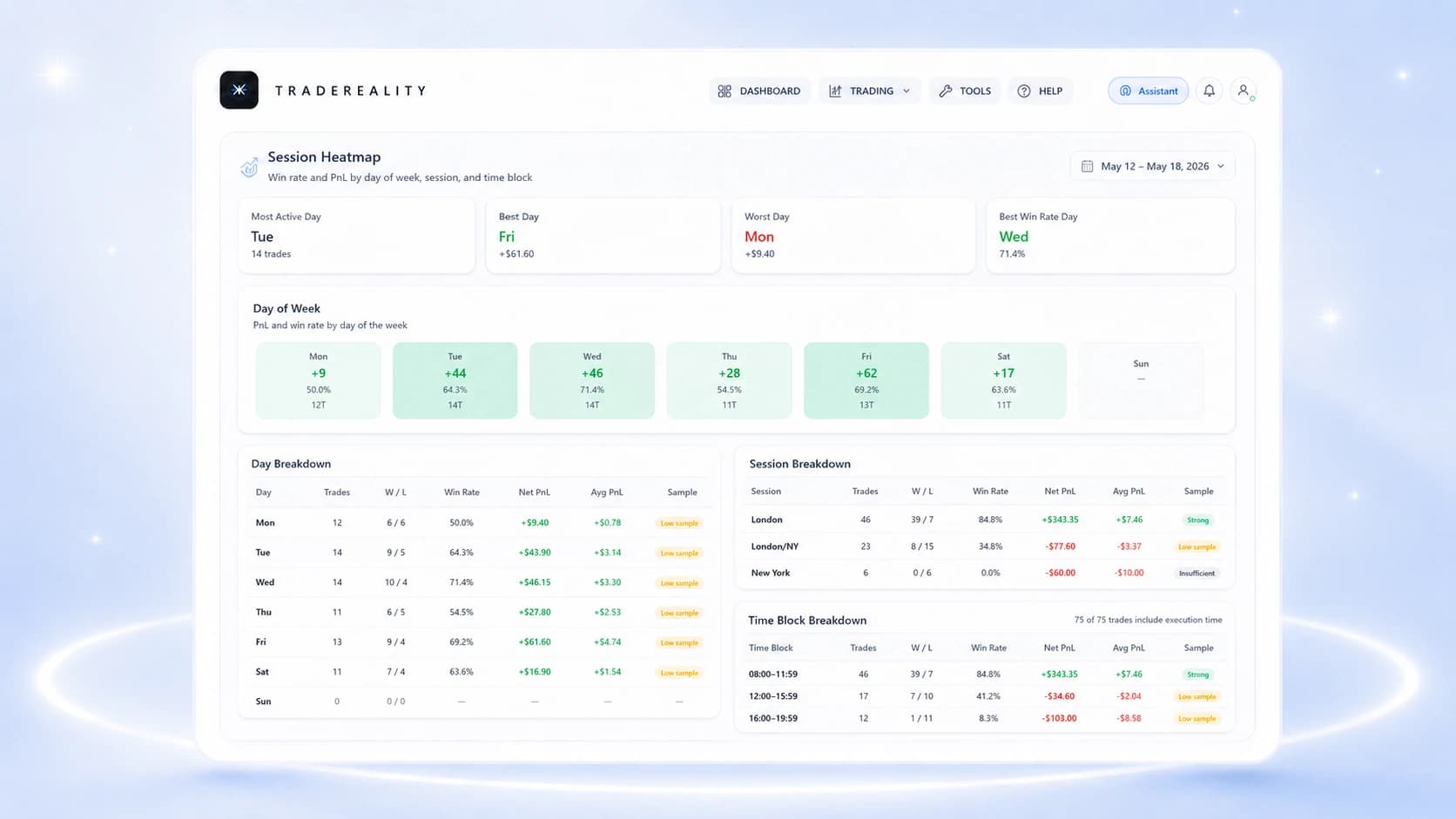
Session heatmap analysis shows which time blocks have the highest trade density relative to result quality. When the third hour consistently shows more trades and worse results, that is a statistically visible overtrading window — not a guess.

Journal entries provide the behavioral context: what was the emotional state when those trades were placed, what had happened in the session before, and what setup logic (if any) was used. This combination — heatmap data plus journal context — is what makes the trigger identifiable.

TradeReality session heatmap showing time-block trade density and performance patterns

What to review after an overtrading session

After a session where you placed trades outside your rules, use these review questions — answered from your journal entry, not from memory:

  • What was the session context when the extra trades were placed? (early, middle, or late session?)
  • What happened immediately before the overtrading started? (a loss, a missed setup, boredom?)
  • What setup logic — if any — was used to justify the extra trades?
  • What was your emotional state at the time? (logged at entry, not reconstructed after the result)
  • What specific session rule did the trades violate?
  • What rule applied to that specific window would have stopped the trades?

How TradeReality supports overtrading review

TradeReality captures the session data needed to make overtrading patterns visible: time-block analytics, trade count per session phase, journal entries linked to each session, and monthly trend analysis.

No signals. No automatic blocking. TradeReality is a review system — it surfaces what your sessions show. Applying corrections is your decision.

Session heatmapTime-block performance showing where trade density and rule breaks cluster
Trading targetsTrack session rule adherence as a measurable target — not just outcomes
Journal historyReview behavioral notes and emotional state logs from overtrading sessions
Monthly PDF reviewMonthly summary highlighting recurring behavioral patterns including session rule breaks
P&L calendarDay-level session view to identify which days overtrading appears most often

FAQ

What is overtrading?

Overtrading is placing more trades than your session rules allow — often driven by boredom, loss recovery urgency, or the feeling that you are missing setups. The trades are placed despite the absence of a valid setup.

Why does overtrading keep recurring?

Without reviewing what triggered each overtrading episode, the emotional cause is never isolated. The behavior repeats because the pattern remains invisible — not because the trader lacks awareness.

How can a trading journal help stop overtrading?

A journal does not stop the impulse — but it creates the evidence needed to identify the trigger. Once you can see that overtrading consistently happens in the third hour after two losses, you can apply a specific rule to that window.

What rule should stop overtrading?

The specific rule depends on your pattern. Common effective rules include: maximum trade count per session, mandatory pause after a losing streak, and a cooldown period after hitting a daily loss threshold. None of these can be designed without first identifying your specific overtrading pattern.

Does TradeReality prevent overtrading automatically?

No. TradeReality is a review system, not a trade blocker. It helps you identify overtrading patterns from your recorded session data — but applying corrections requires your own decision and discipline.

Is overtrading always harmful?

Overtrading outside your rules is harmful because it distorts your feedback data — if you violate your process, you cannot fairly evaluate whether your approach works. Staying within your session rules is what makes improvement measurable.

Make overtrading patterns visible with evidence.

Session analytics, behavioral journals, and monthly reviews built from your own trade data — without signals or predictions.

Disclaimer: TradeReality is educational analytics software. It does not provide financial advice, trade signals, or market predictions. Trading involves significant risk of financial loss. All trading decisions remain solely with the user.