BEHAVIOR JOURNAL

Trading Behavior Journal for Pattern Review

A trading behavior journal captures the layer that a trade log does not: why each decision was made, what emotional state was present, and whether session rules were followed. That context is what makes behavioral patterns visible.

Outcomes tell you what happened. Behavior tells you why. Over many sessions, a behavioral journal reveals the recurring patterns behind repeated mistakes — so corrections can be deliberate rather than reactive.

TradeReality is structured around this review cycle. Session journals, behavioral tags, and pattern analytics are built into the workflow — not added on top of it.

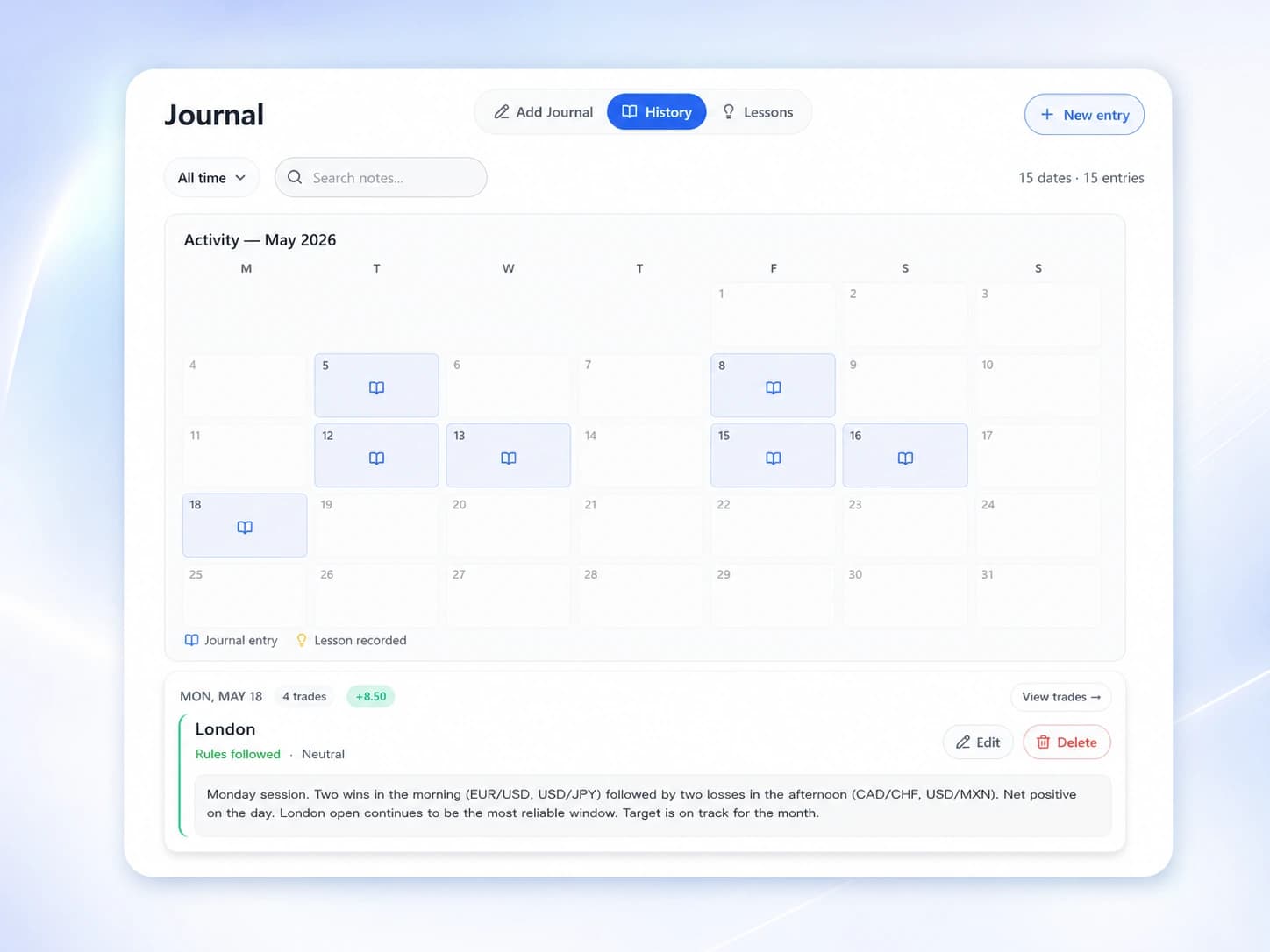
TradeReality journal history showing behavioral notes, emotional tags, and decision context per session

What is a trading behavior journal?

A trading behavior journal is a structured record of the decision process behind each trade. It captures what you saw, what you felt, what rules you were following (or not), and what you observed after the result — not just the entry and exit.

The goal is to create an evidence base that makes behavioral patterns visible across sessions. Without this context, recurring mistakes look like random variance. With it, they become identifiable patterns with specific triggers — which is the first step toward correction.

Decision context

Records why each trade was entered — not just what was traded.

Emotional state

Tags urgency, fear, confidence, and hesitation at the moment of the decision.

Rule adherence

Tracks whether session rules were followed — and if not, exactly when they broke.
Why behavior matters more than outcomes

Outcomes are partially determined by market conditions outside your control. Behavior — the decision process you follow — is within your control. Focusing review on behavior gives you a feedback loop you can actually act on.

A series of losing trades might reflect a statistical variance, a flawed strategy, or a behavioral breakdown. Without behavioral logging, distinguishing between these three explanations is impossible. With it, the distinction becomes clear across enough sessions.

  • A losing trade with good process is different from a losing trade with a rule break
  • Outcomes cannot distinguish strategy problems from execution problems
  • Behavioral patterns repeat regardless of market conditions
  • Correcting behavior requires first seeing behavior — which requires logging it
  • Session-level behavioral review is more actionable than outcome-only reporting

What behavioral patterns to track

Not all behaviors need to be tracked equally. Start with the patterns most likely to affect execution quality — the ones that recur under pressure, after losses, or in specific session phases.

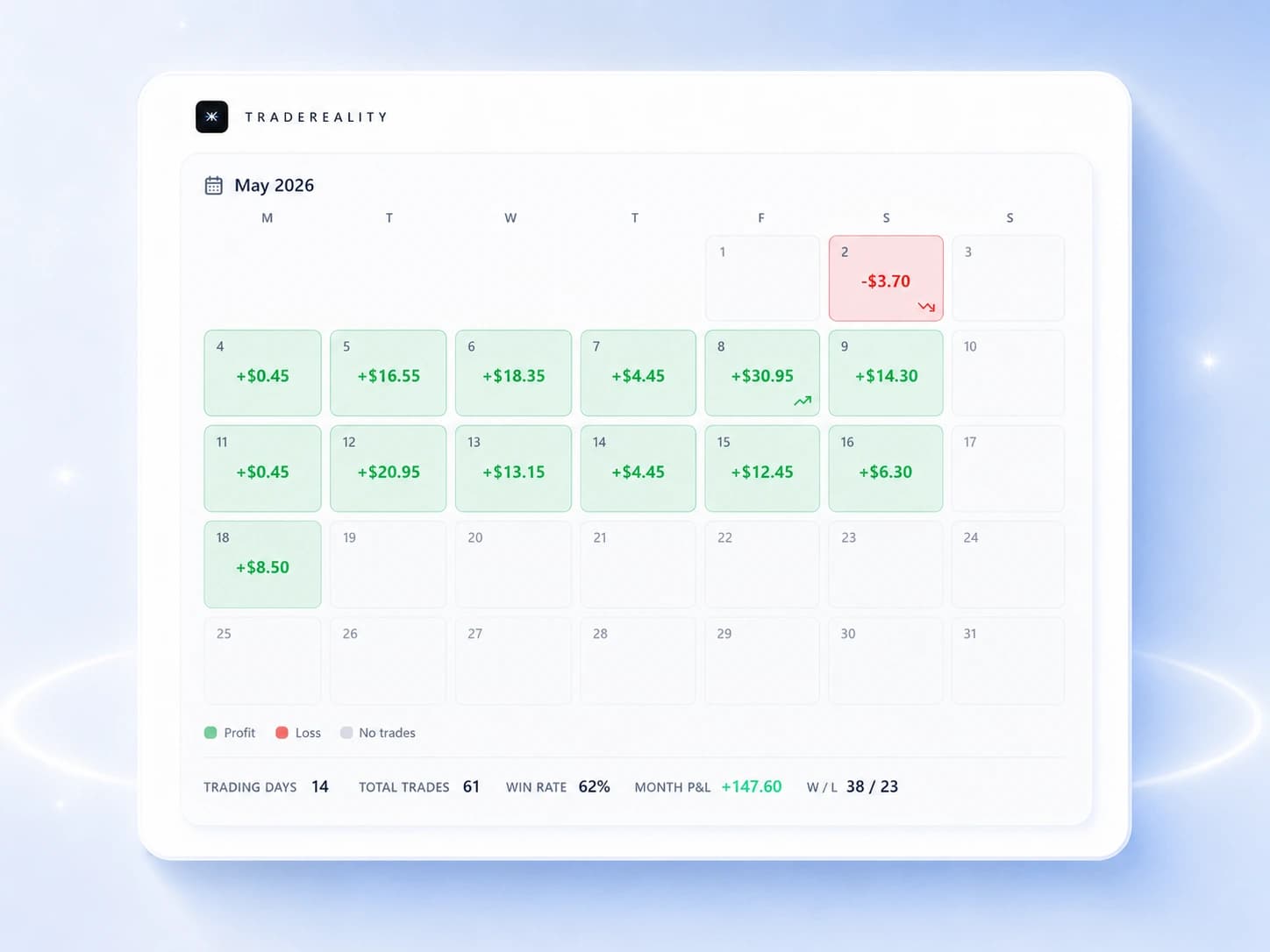
The calendar view in TradeReality shows session-level outcomes with journal markers so you can correlate behavioral observations with result patterns across the month — not just within a single session.

  • Emotional urgency — entries driven by the feeling of needing to act, not by a valid setup
  • Post-loss rule breaks — decisions made to recover a loss rather than follow the process
  • Session phase drift — behavior that degrades in the third hour compared to the first
  • Position size changes — larger sizes placed during emotional pressure rather than by plan
  • Late-session entries — trades placed near session end without clear setup justification
TradeReality P&L calendar with session journal markers and behavioral flags across the month

How TradeReality supports behavior review

TradeReality connects trade entries, session journals, behavioral analytics, and monthly reviews into a single workflow. Behavioral patterns visible in the analytics were built from the journal entries you wrote.

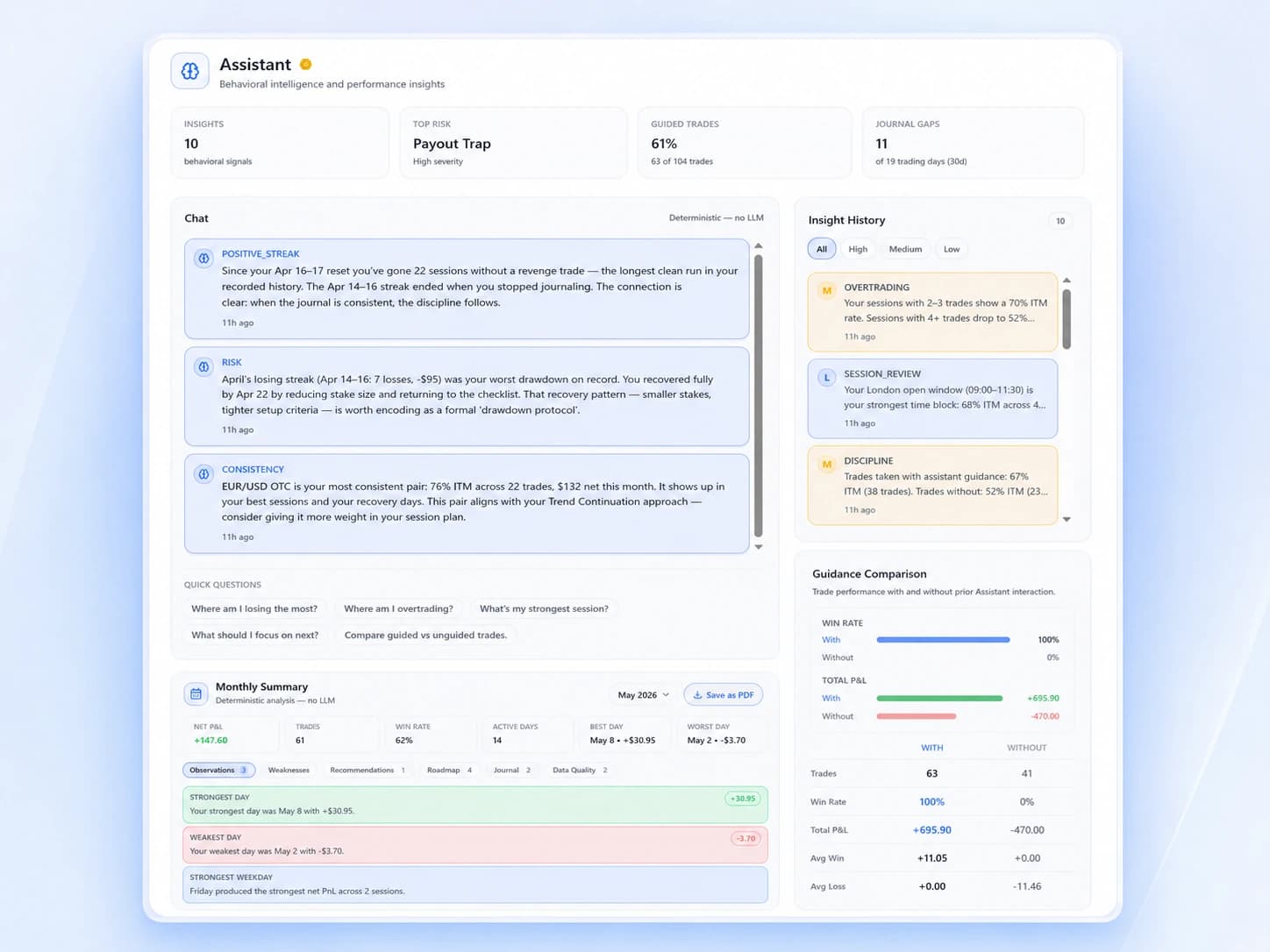
The assistant works only from your recorded sessions and journal notes — no external signals, no market commentary, no predictions. It surfaces what your own data shows.

Session journalWrite behavioral observations linked to each session's trades and context
Journal historyReview behavioral notes across sessions to spot recurring patterns
Session heatmapTime-block performance segmented by hour and day to surface behavioral windows
Monthly PDF reviewStructured monthly summary with behavior focus — not just outcomes
Trading targetsTrack session rule adherence as a measurable target over time
TradeReality assistant workspace surfacing behavioral patterns from your own journal data

FAQ

What is a trading behavior journal?

A trading behavior journal records the decision process behind each trade — emotional state, session context, rule adherence, and post-trade observations — so recurring behavioral patterns become visible across sessions.

How is a behavior journal different from a trade log?

A trade log records outcomes. A behavior journal captures why decisions were made — which is the layer needed to identify and correct recurring execution mistakes.

What behavioral patterns should traders track?

Common patterns to track include emotional urgency at entry, rule breaks after consecutive losses, position size changes under pressure, and late-session overtrading. All require logging the context, not just the outcome.

How many sessions before behavioral patterns become clear?

Meaningful behavioral patterns typically require 20–30 sessions of consistent review. Single-session observations are starting points, not conclusions.

Does TradeReality provide behavioral coaching or advice?

No. TradeReality is educational analytics software. It surfaces patterns from your own recorded data — it does not provide financial advice, trade signals, or behavioral coaching.

Can reviewing behavior improve trading consistency?

Reviewing behavior makes recurring mistakes visible and measurable. That visibility is the prerequisite for deliberate correction — but improvement requires consistent application over many sessions.

Start reviewing your trading behavior with evidence.

Track decision patterns, session rules, behavioral tags, and monthly trends — without signals or predictions.

Disclaimer: TradeReality is educational analytics software. It does not provide financial advice, trade signals, or market predictions. Trading involves significant risk of financial loss. All trading decisions remain solely with the user.