BEGINNER GUIDE

Trading Journal for Beginners

A trading journal is the most useful tool a beginner can start with — not because it is complicated, but because it creates the feedback loop that makes improvement possible. Without it, mistakes repeat without a pattern becoming visible.

You do not need to track everything from day one. Start with the basics: what you traded, why you entered, and one observation after the result. Build from there as the habit becomes consistent.

This guide explains what to track first, how to structure a session review, and how to grow the journal as your review needs develop.

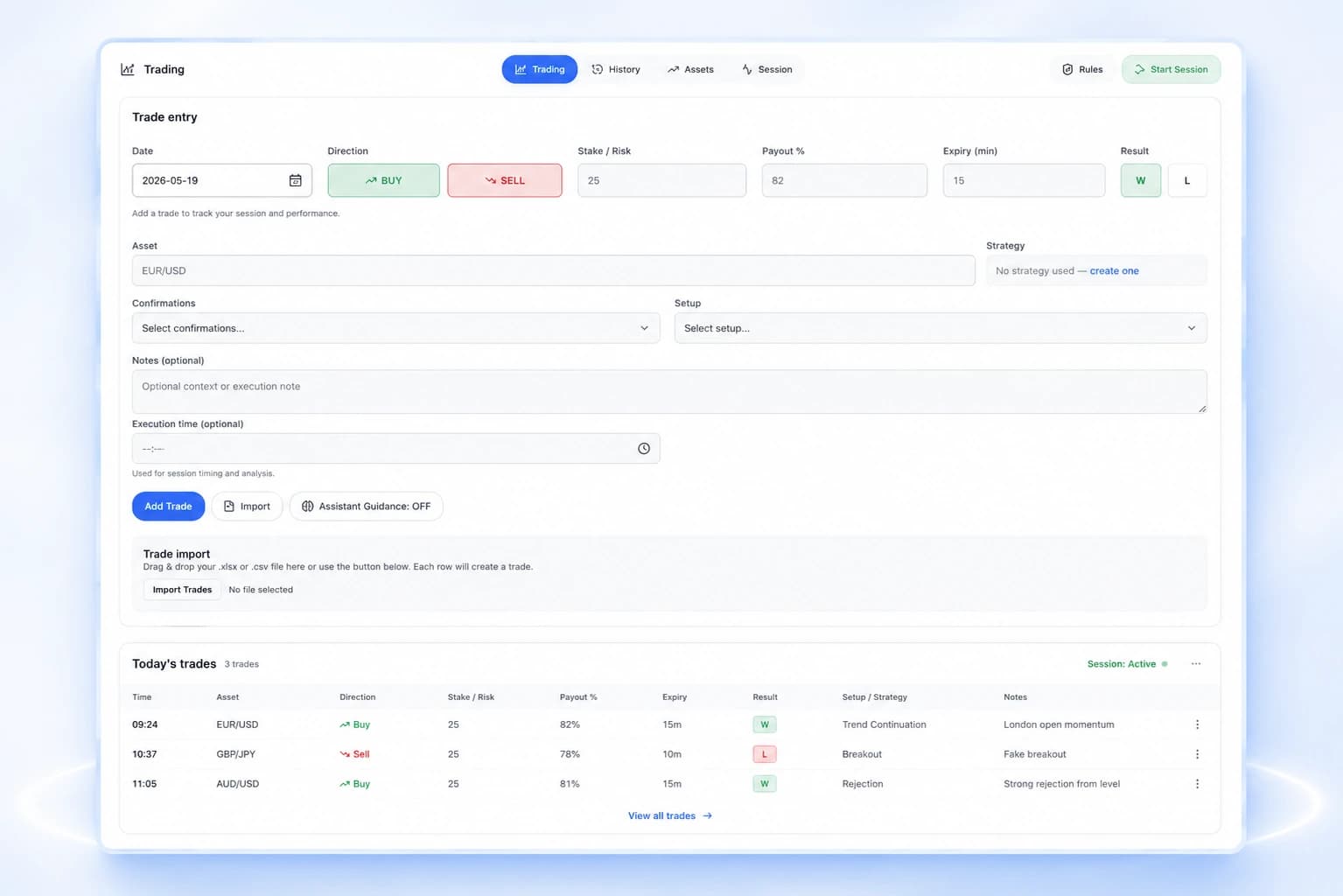
TradeReality trade entry screen showing the fields a beginner fills in for each trade

Why beginners need a trading journal

A trading journal is not a tool for experienced traders who already have a refined process. It is most valuable at the beginning — when patterns are forming and the habits that will determine long-term consistency are being built.

Without a journal, feedback is outcome-based: you made money or you did not. With a journal, feedback is process-based: you followed your rules or you did not, you were calm or you were rushed, the setup met your criteria or it did not. Process-based feedback is the only kind that leads to deliberate improvement.

Builds review habits early

Starting with a journal means building the review habit before bad habits become embedded.

Creates process feedback

Outcome-only feedback cannot distinguish good process from luck or bad process from variance.

Makes patterns visible faster

Even 10–15 sessions produce pattern data when behavioral context is logged from the start.
What to track first

The most common beginner mistake is trying to track everything at once and then stopping after a week because it is too much work. Start with the minimum that creates a useful record. Add fields as the habit is established.

Here is the progression from basic to complete:

01

Week 1–2: Core entry

Asset, direction, and one sentence on why you entered. Build the consistency habit before adding fields.

02

Week 3–4: Add emotional state

Tag your emotional state at the time of entry — confident, uncertain, urgent, or calm. This becomes your most valuable behavioral data.

03

Week 5–6: Add session context

Note your session rule adherence and one observation after each session — not just after each trade.

04

Month 2+: Full review

Add monthly review, pattern analysis, and correction targets once you have enough sessions for patterns to appear.

Session-level tracking matters from the start

Even as a beginner, track sessions — not just trades. A session is the natural unit of review: it has a start, a context, a progression, and an end. Patterns at the session level are often clearer than patterns at the individual trade level.

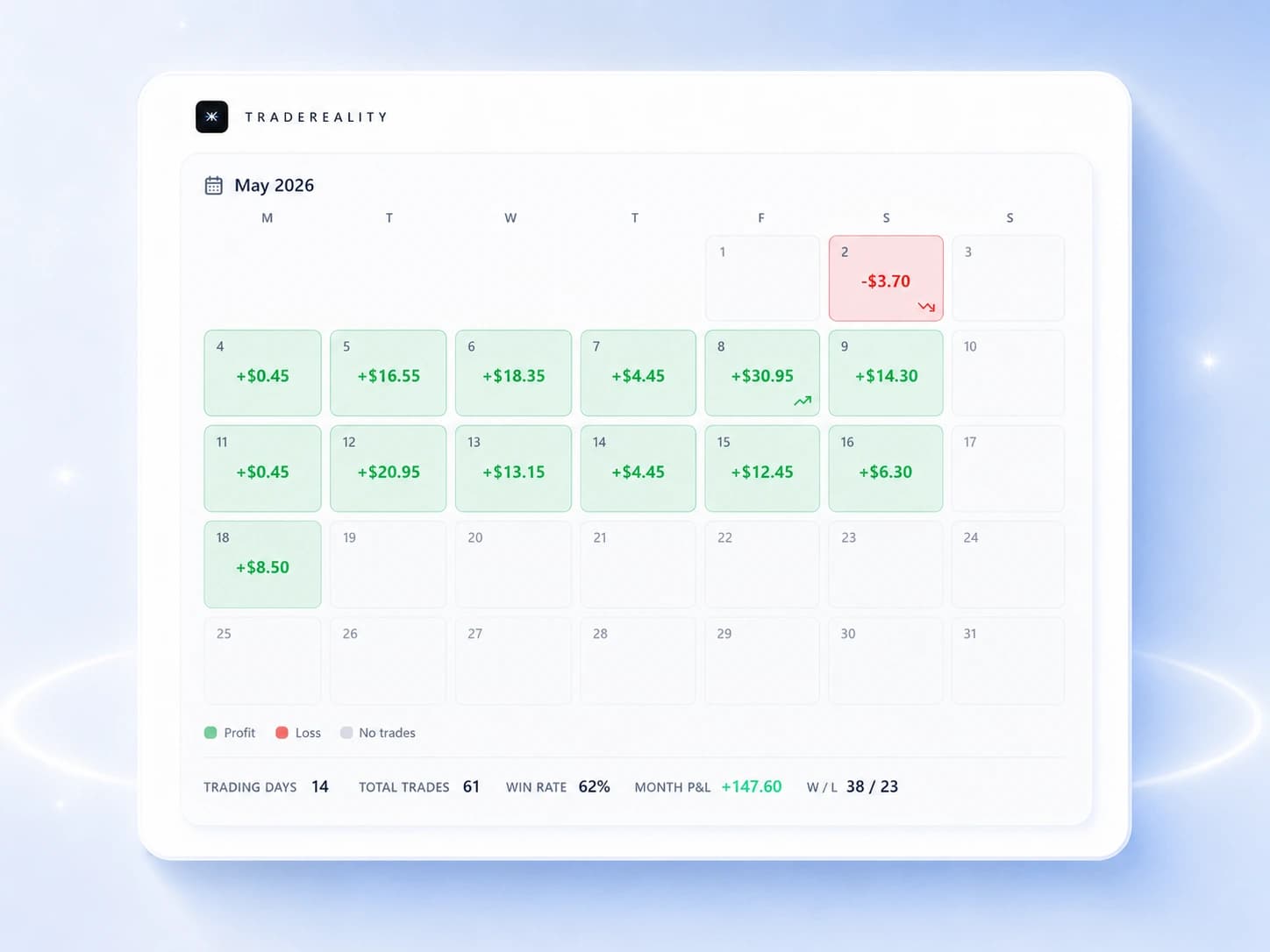
The P&L calendar in TradeReality shows session-level outcomes across the month. For beginners, this provides an immediate visual overview of consistency — which days had well-executed sessions versus poorly managed ones.

TradeReality monthly calendar view showing session-level P&L results for beginners

How TradeReality fits beginner journalers

TradeReality is structured so that beginners can start with the free plan and grow into the Supporter analytics as their review needs develop. The free plan covers everything needed to build the journaling habit and do basic session review.

No broker connection is needed. All trades are entered manually — which means the journal starts with your interpretation of each trade, not an automated import that skips the decision context.

Free planManual trade journal, basic dashboard, and recent trade review — no card required
Trade entryStructured entry fields for asset, direction, reasoning, and emotional state
Session calendarDay-by-day session results visible from the first week of journaling
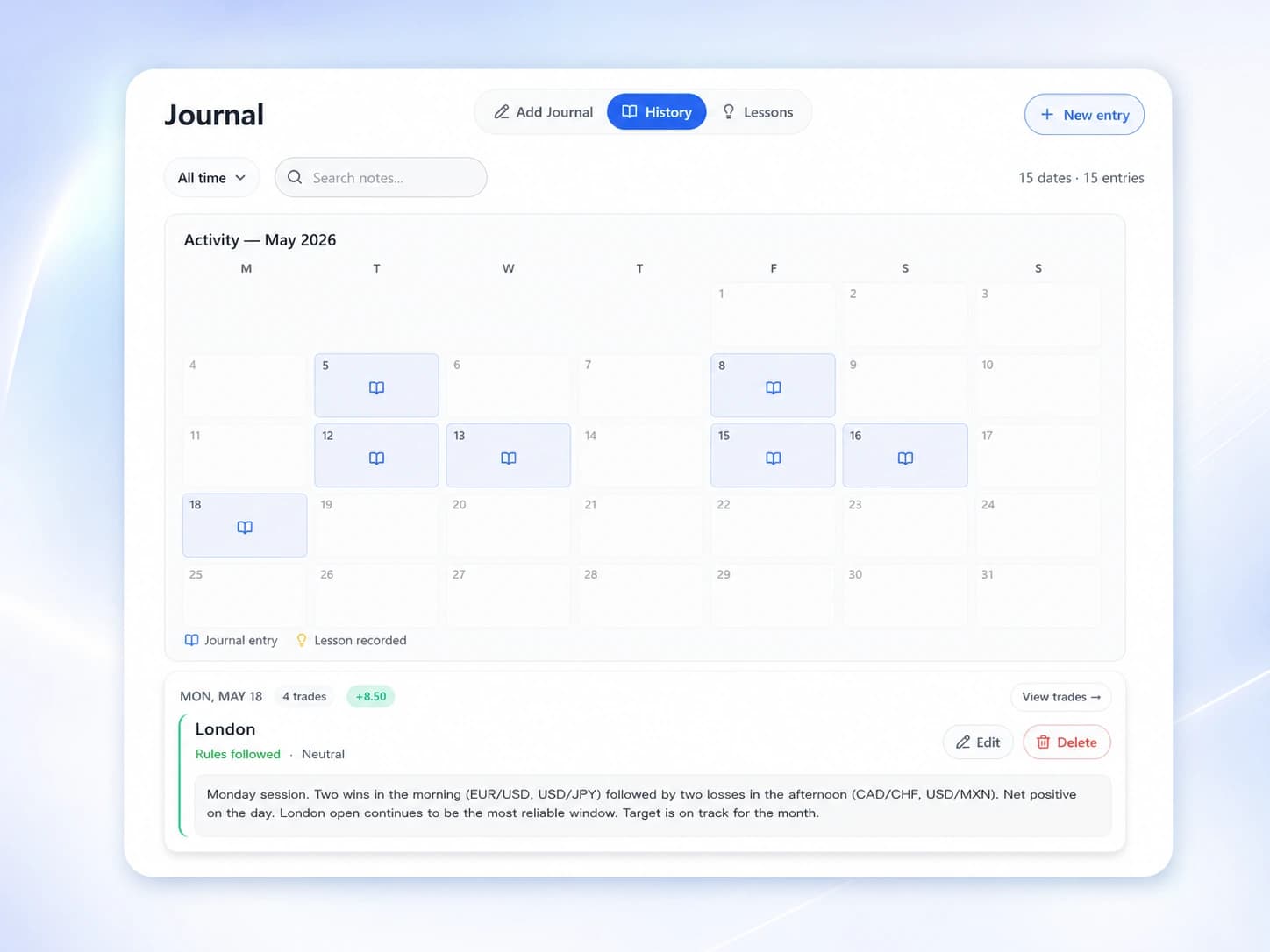
Journal historyAll session and trade notes searchable and reviewable over time
Supporter analyticsSession heatmap, binary edge analysis, and monthly PDF review when you are ready
TradeReality journal history showing trade notes and behavioral tags across sessions

FAQ

Do beginners really need a trading journal?

Yes — especially beginners. The earlier you build the habit of recording decisions and reviewing sessions, the faster behavioral patterns become visible and correctable. Waiting until you have more experience means building habits without a feedback loop.

What is the simplest trading journal for a beginner?

Start with three fields per trade: what you traded, why you entered, and what you observed after. Add session context and emotional state when the habit is established. Complexity should follow consistency, not precede it.

Should I use a spreadsheet or dedicated software?

A spreadsheet can work for pure outcome tracking but lacks session structure, behavioral tagging, and review tools. Software like TradeReality provides these from the start — so you do not need to rebuild your system as your review needs grow.

How long should a trading journal entry take?

A trade entry should take 1–2 minutes. An end-of-session journal note should take 3–5 minutes. Review quality comes from consistency over time, not from writing lengthy individual entries.

When should I review my journal as a beginner?

Run a short end-of-session review every day you trade. After 20 sessions, you will have enough data for your first session-level pattern analysis. Monthly reviews become useful after the first 2–3 months.

Is TradeReality suitable for beginners?

Yes. The free plan includes manual trade journal, basic dashboard, and recent trade review — which is everything a beginner needs to start building a review habit. The Supporter plan adds deeper analytics as your needs grow.

Start your trading journal today.

Free plan includes manual trade journal, basic dashboard, and recent trade review. No broker connection required.

Disclaimer: TradeReality is educational analytics software. It does not provide financial advice, trade signals, or market predictions. Trading involves significant risk of financial loss. All trading decisions remain solely with the user.